Where to See the NT’s Dark Skies: Darwin’s Astro-Tourism Boom is something you feel more than you read about, and you feel it quickly. Step outside Darwin after sunset, let your eyes adjust for a few minutes, and you’ll notice the sky doing things it never does back home. The glare drops off, the air steadies, and suddenly the Milky Way starts showing its spine instead of a faint smudge.
I’m Paul Beames, and after years guiding travellers through the Northern Territory, I’ve watched people fall quiet under these skies more times than I can count. Not because someone told them to, but because the scale of it shuts down the noise in your head. This is astro-tourism without theatre. No velvet ropes. No telescopes, you need a PhD to operate. Just darkness, distance, and Country doing what it’s always done.
Contents
- 1 Why The NT Delivers Dark Skies
- 2 Darwin After Dark: Stargazing Without Going Bush-Crazy
- 3 Heading Inland: When The Sky Really Switches On
- 4 Cold Nights, Hot Stars
- 5 Reading The Sky Through Aboriginal Knowledge
- 6 Timing It Right: When The NT Behaves After Dark
- 7 What You Actually Need Out There
- 8 Why Astro-Tourism Is Taking Off Now
- 9 Planning It Without Stuffing It Up
- 10 Final Thoughts: Darkness Is The Feature
- 11 FAQ
Why The NT Delivers Dark Skies
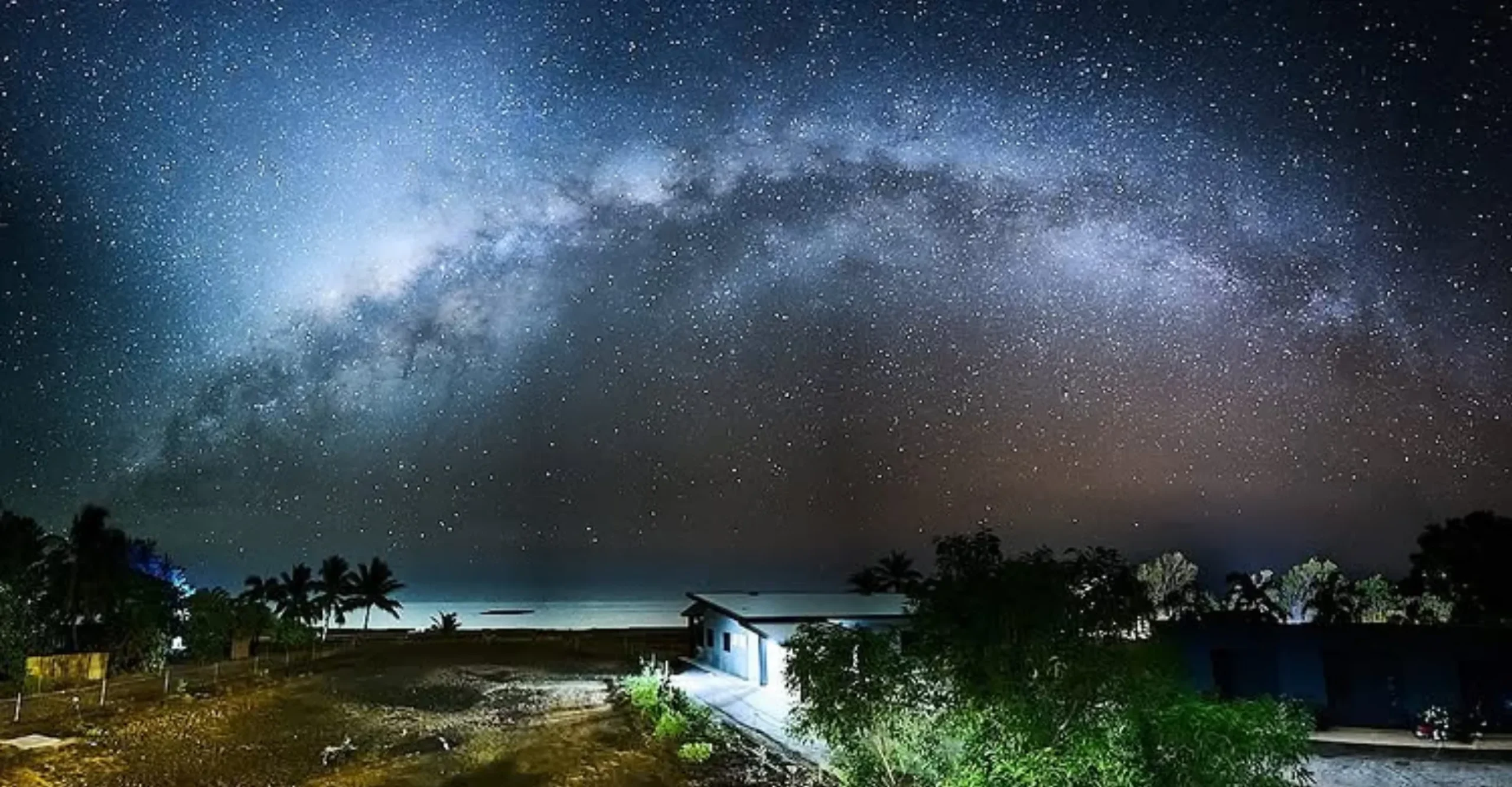
The NT isn’t accidentally good for stargazing — it’s structurally brilliant at it. Vast distances separate towns, the population is thin on the ground, and large chunks of outback Australia sit well beyond the reach of artificial light. Add the Dry season’s stable weather and low humidity, and you’ve got a near-perfect recipe for night-sky watching.
There’s a reason Tourism Australia continues to point travellers north when talking about dark-sky experiences. Compared with southern cities or coastal hotspots, the Territory offers something increasingly rare: genuine darkness. Once you’re away from the last set of traffic lights, the sky opens up fast, especially through Central Australia and the Red Centre.
Darwin After Dark: Stargazing Without Going Bush-Crazy
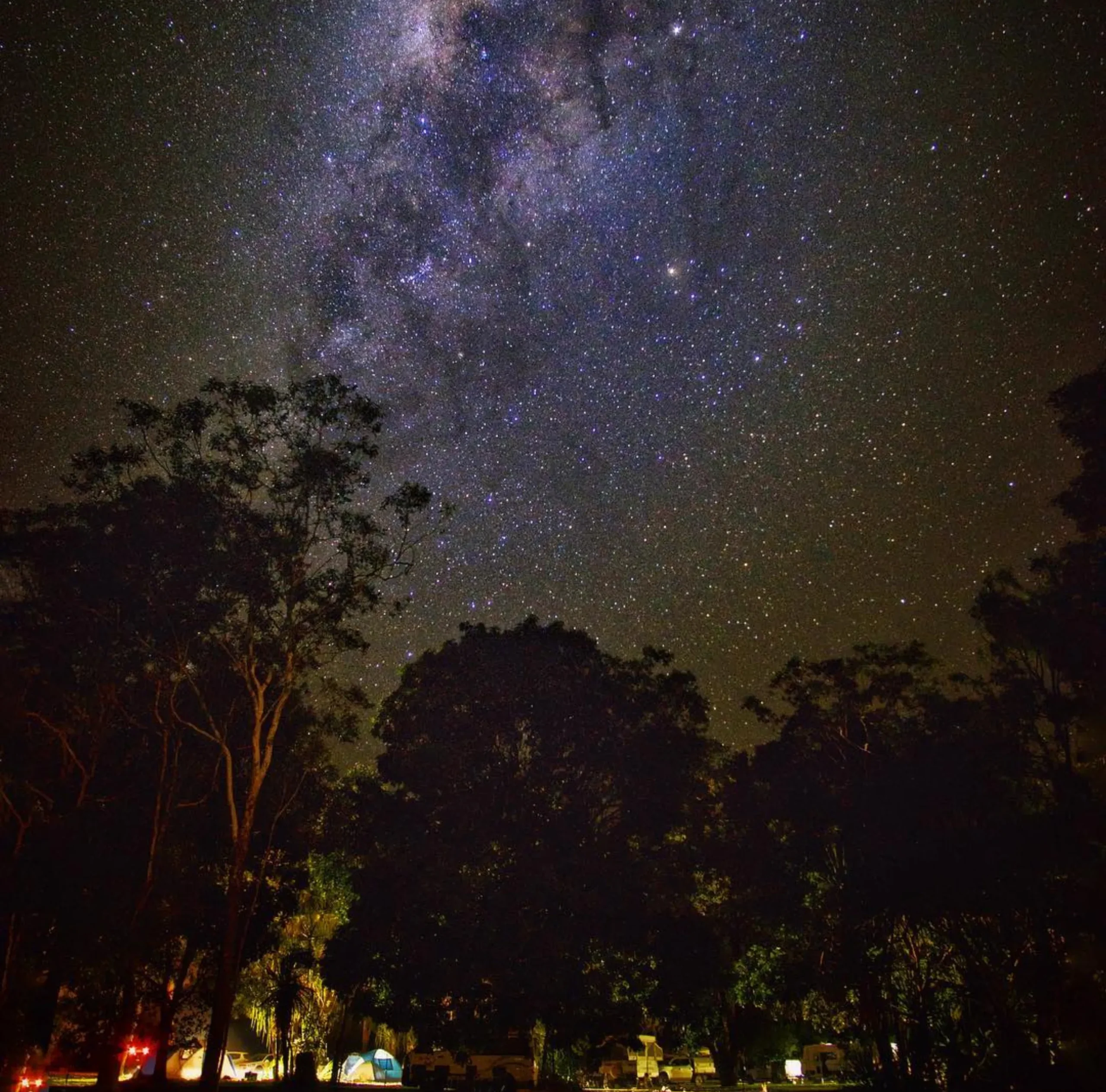
Darwin surprises people. Most expect they’ll need to drive for hours before the stars get interesting, but the reality is kinder. You don’t have to disappear into the scrub for a week to get a decent look at the night sky.
On the fringes of town, places like Charles Darwin National Park and Berry Springs quickly lose the city glow. After sunset, the crowds thin out, the mozzies thicken up, and the stars begin to punch through. This is where several local tour operators now run evening sessions, often pairing stargazing with relaxed storytelling or guided walks.
It’s also where the conversation starts to move beyond science and into Aboriginal culture. Many experiences around Darwin now include explanations of how stars relate to seasons, food sources, and travel routes — knowledge passed down long before telescopes entered the picture.
Heading Inland: When The Sky Really Switches On
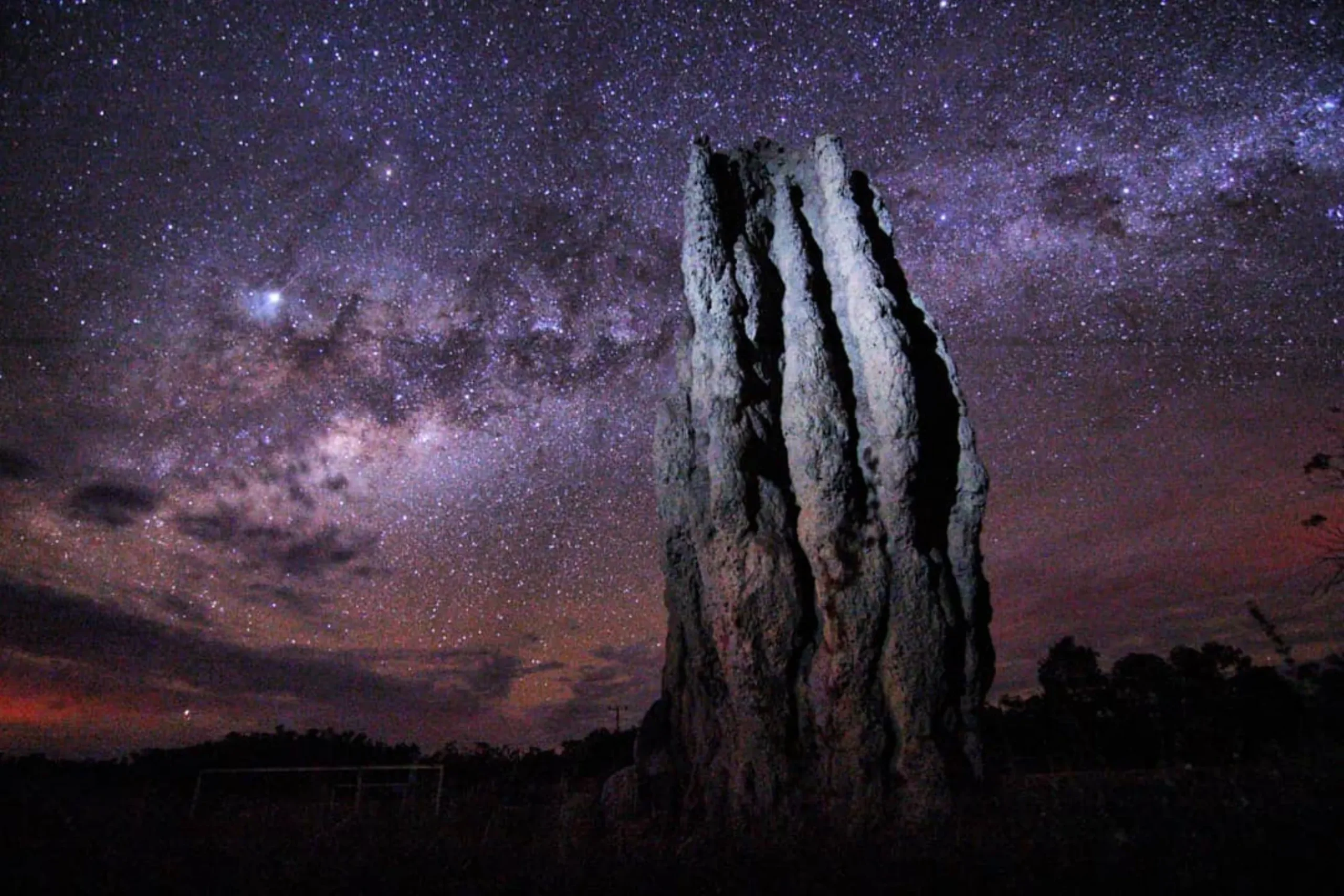
Once you leave Darwin and point the bonnet south or east, the transformation is immediate. The road straightens, the traffic thins, and every kilometre strips away another layer of light pollution.
In Nitmiluk National Park, nights are quiet in a way that feels deliberate. After the last boats finish cruising Nitmiluk Gorge, the campground settles, and the sky takes over. Further north, Kakadu National Park offers similar rewards in the Dry season, particularly around areas near Jim Jim Falls, where the air is clearer, and the horizons are wide.
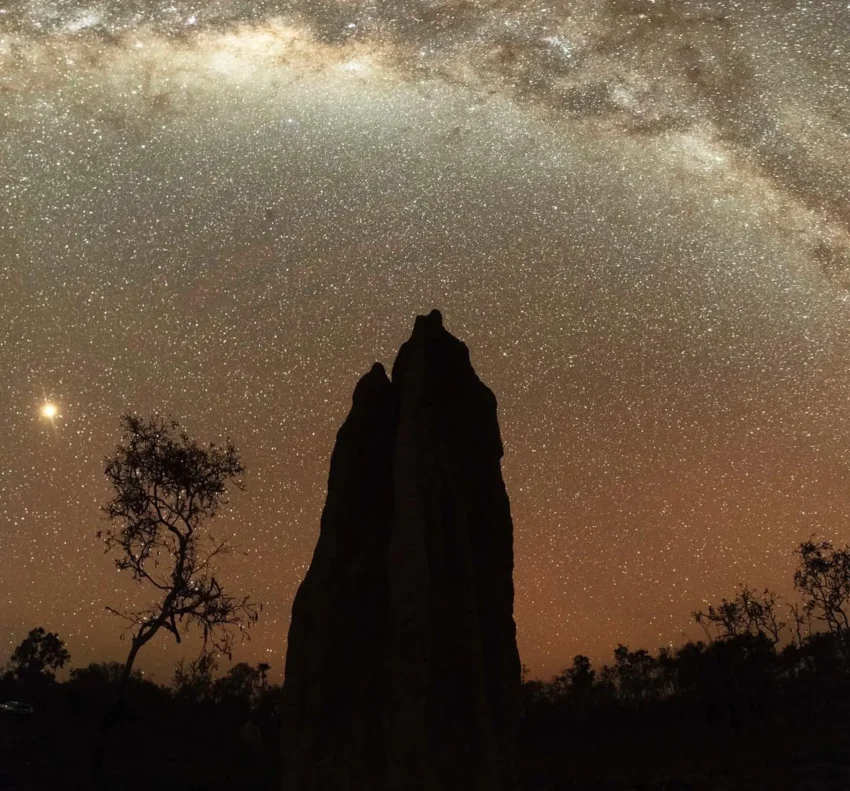
Then there’s Karlu Karlu, also known as the Devils Marbles. Standing there after dark, with ancient granite shapes silhouetted against star clusters, is one of those moments that recalibrates your sense of time. People stop fiddling with cameras. They just look.
Cold Nights, Hot Stars
The Red Centre is where astro-tourism stops being casual and starts becoming something people plan trips around. Around Alice Springs, the nights drop cold, the air dries out, and the sky sharpens into focus.
This is also where indigenous culture and astronomy are most tightly interwoven. Stars here aren’t decoration — they’re instruction. They mark seasonal change, law, and story. Many local guides and cultural tours Darwin explain how constellations align with Dreaming narratives and practical knowledge that’s still relevant today.
Driving between Alice Springs and Tennant Creek along the Stuart Highway, I’ve pulled over more than once simply because the sky demanded it. No sound but tyres cooling and the occasional dingo call. That’s the Territory at night.
Reading The Sky Through Aboriginal Knowledge
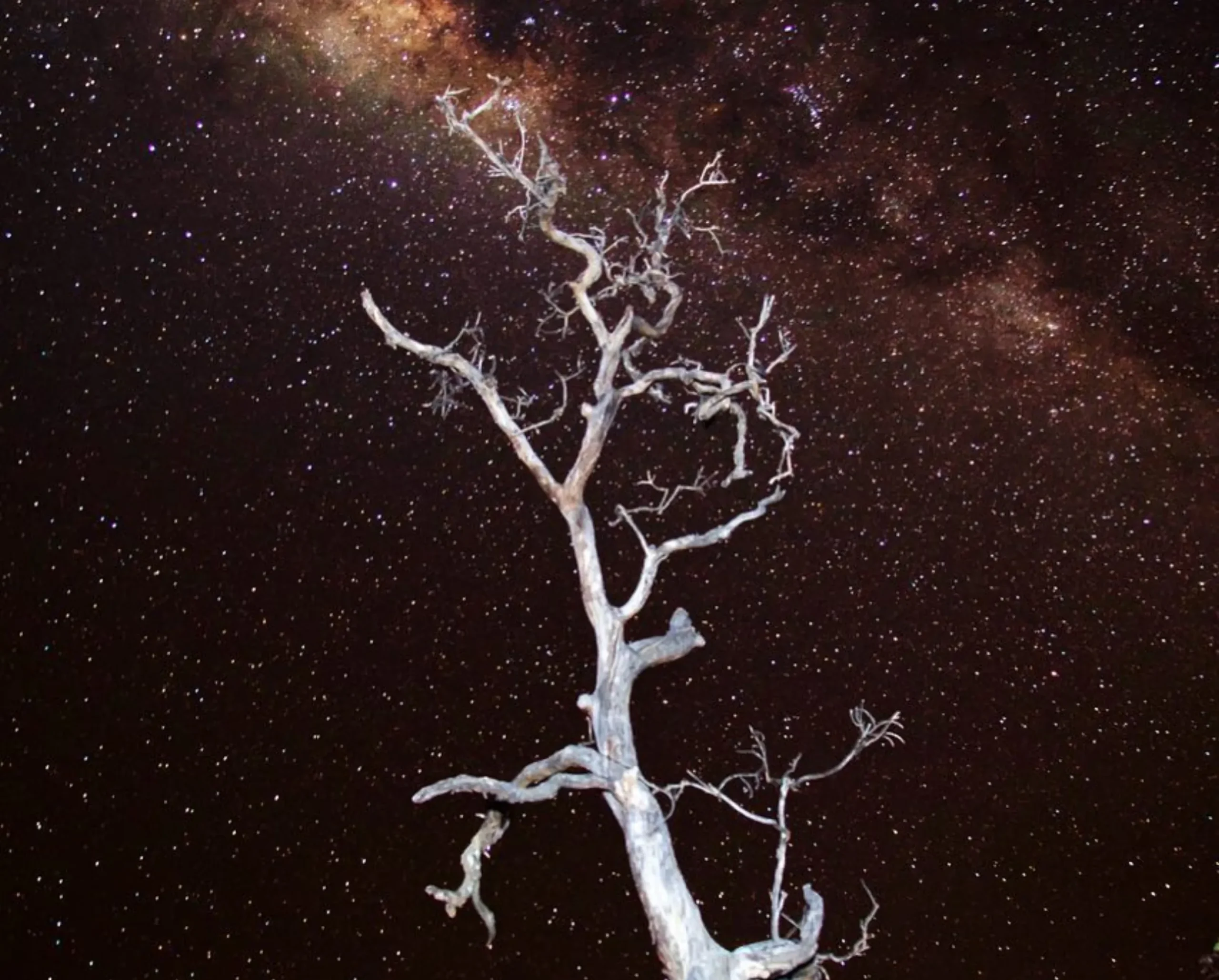
To understand NT stargazing properly, you have to accept that Western astronomy is only one layer. For tens of thousands of years, Aboriginal people have read the night sky as a living map.
Through indigenous cultural experiences, visitors learn how stars connect to ceremony, land management, and seasonal movement. This knowledge often appears in Aboriginal art, shared through community spaces like the Outstation Gallery or via cultural enterprises such as Aboriginal Bush Traders. It’s not a performance — it’s continuity.
When you’re invited to listen, do so properly. Follow access advice. Stick to permitted areas. This is a shared Country, not an open-air museum.
Timing It Right: When The NT Behaves After Dark
You can technically stargaze year-round, but anyone who tells you all months are equal hasn’t spent much time sweating through a cloudy Wet.
| Season | Months | Night Conditions | Reality Check |
|---|---|---|---|
| Dry Season | May–September | Clear, cool | Best visibility |
| Build-Up | October–November | Hazy, stormy | Atmospheric but hot |
| Wet Season | December–April | Cloud cover | Fewer stars, big storms |
The Dry season is when most booking services and guided experiences operate for a reason. Clear skies, manageable temperatures, and fewer disruptions make it the safest and most rewarding time to plan your stargazing.
What You Actually Need Out There
Astro-tourism marketing loves gadgets. The Territory does not. Most nights, your eyes do the heavy lifting.
A headlamp with a red-light setting helps protect night vision. A swag or mat keeps you comfortable. A thermos is worth its weight once the temperature drops. And mosquito repellent is not optional — no matter what month you’re travelling.
Avoid wandering near water after dark, especially around places like the East Alligator River or Bitter Springs. Stay croc-wise. The stars will still be there from a safe distance.
Why Astro-Tourism Is Taking Off Now
People are tired of crowded icons and over-curated experiences. Stargazing offers the opposite. Silence. Space. Time to think.
Across the NT, Wildlife tour operators are responding with small-group night walks, cultural storytelling sessions, and low-impact viewing experiences. The focus isn’t spectacle — it’s connection. That shift is why Darwin and the wider Territory are quietly becoming a go-to destination for travellers chasing darker skies.
Planning It Without Stuffing It Up
If you’re weaving stargazing into a bigger NT trip, practicality matters. Fuel distances along the Stuart Highway are real. Some Aboriginal lands require permission. Seasonal road closures can quickly reroute plans.
At Get Lost Travel Group, we offer personalised travel advice built on current road conditions and local knowledge, not assumptions pulled from a map. That’s the difference between a smooth night under the stars and sitting in the dark, wondering where things went sideways.
Final Thoughts: Darkness Is The Feature
The heart of Where to See the NT’s Dark Skies: Darwin’s Astro-Tourism Boom is simple. The Northern Territory doesn’t need to manufacture wonder. It just removes the light and lets the sky remind you how big things really are.
Slow down. Look up. And give the stars the time they deserve.
Got a favourite night-sky stop near Alice Springs or Karlu Karlu that I’ve missed? Drop it in the comments. I’m always updating the field notes.
FAQ
Is the Northern Territory really darker than most of Australia?
Yes. Low population density and limited artificial lighting make large parts of the NT some of the darkest regions in the country.
Can I see the Milky Way close to Darwin?
You can. Even short drives outside the city reveal clear views during the Dry season.
Are Indigenous-led stargazing experiences available?
Yes. Many tours incorporate Aboriginal knowledge and cultural storytelling alongside night-sky viewing.
Do I need permits to stargaze in remote areas?
Some Aboriginal lands require permission. Always check access conditions before travelling.
Is stargazing safe in remote NT locations?
It is with preparation. Stay near camp, avoid night driving, and follow local advice.